Science and Philosophy, April 02

posted in: Media 0

Artemis II has put humans back on the road to the Moon The biggest science story right now is NASA’s successful launch of Artemis II on April 1, sending four astronauts on humanity’s first crewed lunar mission in more than half a century. Why it matters is not just symbolism. This flight is the systems test for the modern lunar era: Orion’s life support, navigation, communications, radiation protection, crew operations, and long-duration performance all have to work before any renewed … Read More
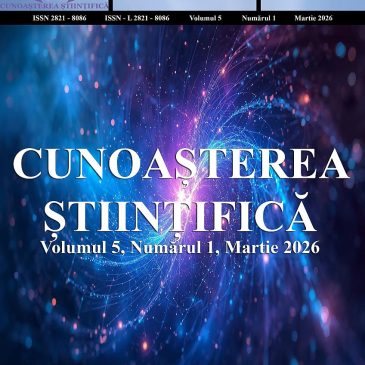
PRESS RELEASE: The website of the academic journal “Cunoașterea Științifică” (“Scientific Knowledge”) is now available in a bilingual format, in Romanian and English

posted in: Media 0

March 24, 2026 — The academic journal “Cunoașterea Științifică” (Scientific Knowledge) announces that its website, cunoasterea.ro, is now available in a bilingual format, in Romanian and English, marking a new step in strengthening its editorial visibility and expanding international access to the scientific content it publishes. This development continues an editorial direction adopted as early as 2022, when the journal began publishing articles in English. Since then, the publication has steadily supported broader international accessibility and academic outreach. At the … Read More

The Emperor and the Stoic Sage: Philosophical Themes in Marcus Aurelius’ Meditations

Marcus Aurelius’ Meditations is a unique work in ancient philosophy: the private reflections of a Roman emperor striving to live up to Stoic ideals. This essay offers a comprehensive analysis of the Meditations’ philosophical content, examining its major themes in the context of the broader Stoic tradition and Marcus’ own role as ruler. It explores how Marcus articulates core Stoic principles—virtue as the sole good, the use of reason to live in accordance with nature, acceptance of fate and the transience of life, preparation for death, mastery over one’s mind and passions, and the obligations of social duty and cosmopolitan justice. Each theme is analyzed with close reference to passages from the Meditations (using a consistent English translation) and informed by scholarly perspectives on Stoicism and Roman intellectual life. The essay argues that Marcus adapts Stoic philosophy into a personal ethic of governance and self-mastery, displaying both the alignment and tension between Stoic detachment and imperial responsibility. In doing so, Marcus Aurelius emerges as both a faithful heir to the Stoic tradition and an individual voice reflecting the challenges of practicing philosophy while wielding supreme power. Through detailed textual analysis and engagement with academic interpretations, the essay illuminates how the Meditations encapsulates Stoic wisdom in the hands of a “philosopher-king.” It concludes that Marcus’ sincere attempt to integrate virtue with rulership has secured his legacy as an exemplar of philosophical leadership in Western tradition.

The Evolution of Global Warming: Tipping Points, Human Inaction, and Future Scenarios

Global warming is an unequivocal reality, and overwhelming scientific evidence attributes this rapid climate change to human activities. Since the Industrial Revolution, humans have poured billions of tons of carbon dioxide (CO₂) and other greenhouse gases into the atmosphere, trapping heat and raising Earth’s temperature at an unprecedented rate. The scientific consensus is clear: human-induced climate change is real, measurable, and accelerating, and its potential consequences pose profound challenges for the future of civilization. On one path, humanity manages to unite in an unprecedented effort to cut emissions, protect ecosystems, and innovate towards sustainability – in time to avert the worst outcomes. On the other, we continue with half-hearted measures and discord, thereby forfeiting our last chance to keep climate change within controllable bounds.

The Evolution of Human Intelligence Throughout a Person’s Life – A Lifelong Journey

The evolution of human intelligence during a person’s lifetime is a process influenced by an interaction between biological development, genetics, environmental factors, and personal experiences. To comprehend the progression of intellectual growth, it is essential to explore the emergence, maturation, and sometimes, the decline of cognitive abilities, illustrating a complex interplay between genetic predispositions and environmental influences.

Discovery of Astatine by Horia Hulubei

The search for new chemical elements was a prominent scientific endeavor in the late 19th and early 20th centuries. This era saw the discovery of several elements such as radium, polonium, and radon by prominent scientists such as Marie Curie and Ernest Rutherford. Astatine was one of the missing elements from the periodic table, and its existence was predicted due to the periodicity of the elements, with iodine as its nearest stable neighbor. Scientists have sought to confirm its existence and properties. The discovery of astatine by Horia Hulubei and his collaborator Yvette Cauchois at the beginning of the 20th century is recognized by many scientists, although the authorship of this discovery was ignored by the Austrian radiochemist Friedrich Paneth, who was responsible for setting priorities in the discovery of new chemical elements. This article will delve into the historical background and scientific endeavors that led to the discovery of astatine by Horia Hulubei.

Epistemology of Loop Quantum Gravity in the Context of Canonical Quantum Gravity

In the quest to comprehend the fundamental nature of the universe, physicists have delved into the realms of quantum mechanics and general relativity. However, joining these two pillars of modern physics into a unified framework has been a longstanding challenge. Canonical Quantum Gravity, particularly in the form of Loop Quantum Gravity, emerges as a prominent contender in this endeavor. The epistemology of Loop Quantum Gravity encompasses a diverse range of principles and methodologies, including empirical foundations, mathematical rigor, background independence, and philosophical implications, all of which contribute to our understanding of the theory and its implications for our conception of the universe.

The Republic of Plato: A Philosophical Odyssey

Sfetcu, Nicolae (2024), The Republic of Plato: A Philosophical Odyssey, Cunoașterea Științifică, 3:1, 134-144, DOI: 10.58679/CS59183, https://www.cunoasterea.ro/the-republic-of-plato-a-philosophical-odyssey/   Abstract The Republic, written by the ancient Greek philosopher Plato, is a timeless masterpiece of political philosophy and ethics. Composed around 380 BCE, this influential work presents a comprehensive vision of an ideal society and explores fundamental questions about justice, morality, and the nature of the human soul. The Republic is not just a treatise on politics but also on ethics, education, … Read More

Cosmological Tests Based on General Relativity for Gravity

In the realm of cosmology, understanding the nature of gravity is crucial for unraveling the mysteries of the universe. The current cosmological models are built based on general relativity. The solutions of the specific equations, Friedmann-Lemaître-Robertson-Walker, allow to model the evolution of the universe starting from the Big Bang. Some of the parameters of the universe have been established by observations. Based on these, and other observational data, the models can be tested. Predictions include the initial abundance of chemical elements formed in a period of nucleosynthesis during the Big Bang period, the subsequent structure of the universe, cosmic background radiation, and so on.

Philosophy of Emotional Intelligence

The philosophy of emotional intelligence delves into the profound implications of emotional intelligence on personal development, interpersonal relationships, and society as a whole. The critical reflection of the aspects of emotional intelligence can be put on account of the different epistemological perspectives, reflecting the maturity of the concept. There is a need to find consistent empirical evidence for the dimensionality of emotional intelligence and to develop appropriate methods for its correct and useful measurement. A concern of researchers is whether emotional intelligence is a theory of personality, a form of intelligence, or a combination of both. Many studies consider emotional intelligence to be a personal factor associated with competence. But most researchers consider emotional intelligence as an emotional awareness of oneself and others, in addition to professional efficiency and emotional management.

1 2

Articles published according to the current editorial policy